
“For the mature professional, knowledge is the primary driver of economic growth and value creation.”
If you’re standing at the edge of self-employment or freelance consulting, you might be wondering: What do I really have to offer? The answer: a lot more than you think. Your years of experience have furnished you with something far more valuable than any job title—deep, applied knowledge and the ability to solve problems in context.
In the knowledge economy, value isn’t measured in time spent or hours billed—it’s measured in clarity, results, and the ability to navigate complexity. This article is your guide to identifying your know-how, making sense of your transferable skills, and positioning yourself not as a job seeker—but as a provider of insight.
Expertise Is Capital: Make Your Knowledge Work for You
There’s a reason experts are paid well. Not because they know everything, but because they know what matters—and what to do with it. In consulting, your knowledge is your capital. But here’s the catch: if you don’t understand its value, no one else will either.
As Cal Newport argued in So Good They Can’t Ignore You, the key to long-term career satisfaction is cultivating rare and valuable skills—the kind that can’t be replicated with a quick online search.
“A commodity is something indistinguishable. You are not a commodity—you’re a custom solution.”
“You are selling knowledge, which comes from focus… and your strength comes from having seen this before and knowing how to fix it.” — David C. Baker
So, how do you protect yourself from being seen as just another generalist?
Start thinking of your career not in terms of job titles, but in terms of intellectual capital:
- Domain knowledge
- Pattern recognition
- Decision-making ability under complexity
- Strategic insight based on lived experience
These aren’t just soft skills. They are what make you valuable in a freelance world that’s craving expertise on demand.

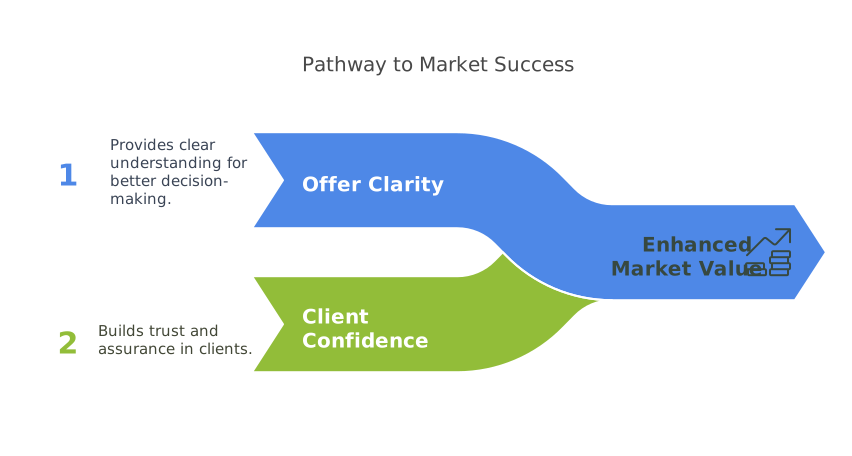
Two Engines of Value: Know-How & Transferable Power
Many professionals struggle to articulate what makes them valuable because they haven’t distinguished between two very different forms of skill:
- Know-how is the intuitive, deep-seated understanding of how things really work. It’s tacit. It lives in your gut.
- Transferable skills are those portable superpowers—communication, leadership, adaptability, critical thinking—that work in any industry.
“Know-how is what you do without thinking. Transferable skills are how you explain it when someone asks.”
“Mastery is the ability to reason, explain, design, act, predict and explore.” — Scott Page, The Model Thinker
It’s not either/or. You need both. Think of them as twin engines:
- Know-how gives you depth.
- Transferable skills give you reach.
The Self-Assessment That Unlocks Your Story
Let’s get practical. Before you can sell what you do, you need to be able to see what you’ve done. That means looking beyond your résumé.
Ask yourself:
- What problems do I consistently solve?
- What have I done that others struggle to replicate?
- What outcomes have I delivered?
“Don’t just update your resume. Upgrade your understanding of what you’ve really done.”
“People who organise knowledge into mental models and connect it to prior learning show an advantage in mastering complexity.” — Make It Stick
Try this:
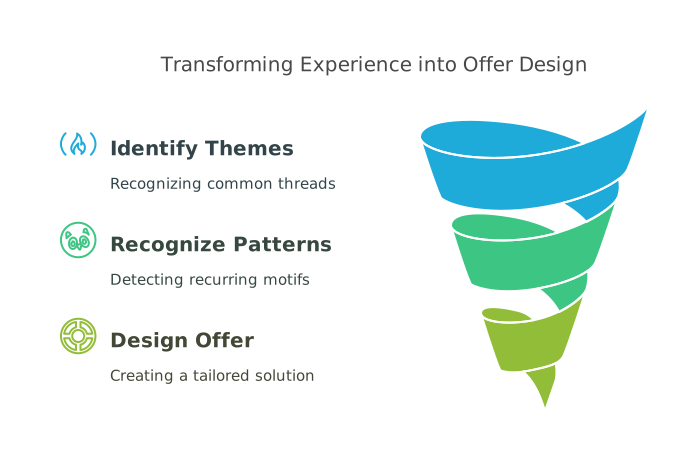
- Use a Life Story Worksheet to extract your career patterns.
- Highlight repeated themes: Are you always brought in when things go off track? Do you naturally become the unofficial mentor?
- Reflect on non-paid roles: parenting, caregiving, community leadership—they often reveal powerful skills in organization, emotional intelligence, and adaptability.
Another great trick: Ask, “What would a beginner in my field get wrong?” The answer often points straight to your most refined expertise.
Think Like a Product: Freelance Positioning that Works
In the freelance world, your job title is irrelevant. What matters is:
- What problem do you solve?
- Who benefits from it?
- What results do you deliver?
“They’re not hiring people. They’re hiring outcomes.”
“The human cloud is your Google for experts.”
Position yourself like a product:
- Package your expertise around a need.
- Clarify the outcomes you deliver.
- Create visibility where your ideal clients already are.
And don’t go it alone.
As Annie Murphy Paul notes in The Extended Mind, cognition doesn’t live entirely in your head. Use tools, collaborators, and communities to extend your reach.
“The understanding comes through doing, not just taking in information.”

The T-Shaped Advantage: Stay Sharp, Stay Paid
Mastery doesn’t mean you stop learning. Quite the opposite. The best consultants are constantly deepening and broadening their expertise.
“Mastery requires both the possession of ready knowledge and the conceptual understanding of how to use it.” — Make It Stick
Think like a T-shaped learner:
- Deep in your specialty
- Broad in adjacent areas
“You choose which elements you want to master, then rely on your network to fill in the gaps.”
This isn’t about knowing everything—it’s about building systems to keep growing.
Try this:
- Take short online courses
- Teach what you learn to others (it cements your understanding)
- Reflect on what’s working—and what’s changing

Mental Models That Pay: Share How You Think
Business isn’t about discovering ultimate truths—it’s about making useful models that solve problems in specific contexts.
“The pursuit of knowledge—not truth—is the real game in business.”
“Wisdom is the ability to identify and apply relevant knowledge using appropriate models.” — The Model Thinker
As a mature professional, your edge isn’t just in knowing facts—it’s in knowing how to think. You’ve built mental models that let you cut through noise, filter ambiguity, and make decisions that stick.
Share those models. Teach them. Clients don’t just want execution—they want frameworks that clarify action.

Conclusion: Your Experience is the Foundation of a Thriving Freelance Career
If you’ve spent a lifetime building know-how, it’s time to put it to work for you. This isn’t about reinvention. It’s about reorientation—aligning your existing expertise with a market that’s eager to buy it.
The knowledge economy doesn’t reward longevity. It rewards leverage.
So stop asking, “What should I do next?” and start asking:
“What do I know that others pay for?”
“What do I see that others miss?”
“Who is already looking for this—and how do I show up in their world?”